Services / Vehicle Wraps & Graphics
Vehicle Wraps & Graphics
A wrapped truck works every place it parks. It's the one piece of advertising you buy once and then stop paying for — and out here, where people find you by remembering a name they saw on a door, it does more than any ad you could run.
What's covered
From a set of door decals to the whole vehicle.
Full wraps
Trucks, SUVs, vans and cars taken right around — every panel, edges wrapped and post-heated.
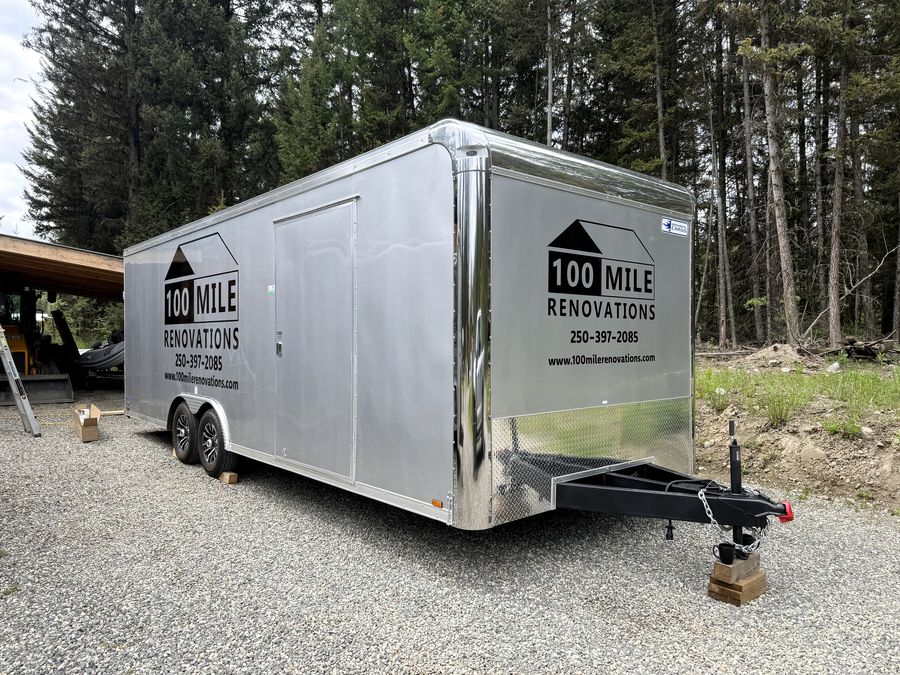
Trailer wraps & decals
Enclosed and flat-deck. Corrugated sides change how the finished job looks — we'll walk you through it before you commit.
Partial wraps
Doors, quarters, hood and bed panels. Most of the visual impact of a full wrap for a fraction of the coverage.
Decal kits
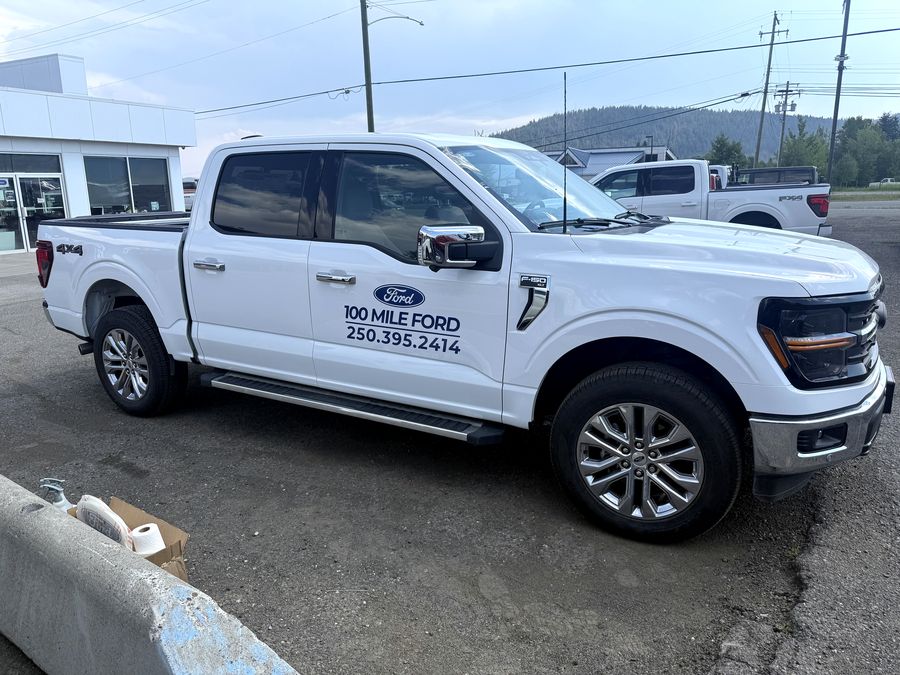
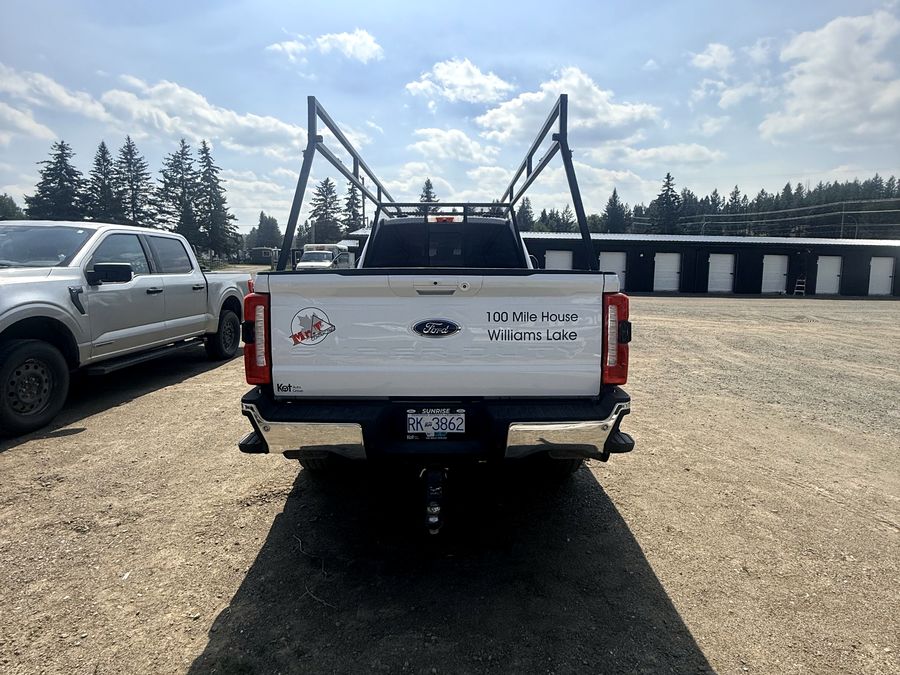
Name, phone, website, licence numbers. The straightforward one, and still the best value on this page.
Colour changes
Personal and commercial. A wrap protects the paint underneath and comes off again when you sell.
Box truck wraps
Large flat panels — the best canvas on the road, and the easiest surface to get a clean result on.
Magnet decals
For when the vehicle is shared, leased, or doubles as the family car.
Paint protection film
Ask us. PPF is a different material and a different job from vinyl graphics — we'll tell you straight whether it's the right call for your vehicle.
Materials
The material decides how long it lasts.
There are two families of vinyl, they cost different amounts, and on a quote they look identical. Two winters later they don't. Here's the difference, so you can ask about it wherever you end up.
Cast vinyl
For anything with a curveMade by pouring a liquid film and letting it cure, so it has no built-in tension. It settles into compound curves, rivets and body lines and stays there.
- Rated 5–7 years outdoors
- Conforms to bumpers, mirrors, deep body lines
- Repositionable during install
- The correct choice for any wrapped panel
Calendered vinyl
For flat surfaces onlyRolled out under pressure, which leaves tension in the film. On a flat panel that's fine and it's the sensible economical choice. Stretched over a curve, that tension pulls it back.
- Rated 3–5 years outdoors
- Fine on flat doors, box sides, signage
- Lifts and bubbles on compound curves
- Cheaper — and the right call on the right job
If a wrap quote comes in well under everything else, calendered film on curved panels is usually the reason. It isn't a cheaper version of the same job. It's a shorter one.
We spec the material to the job rather than to a brand — cast where there are curves, calendered where the surface is flat, reflective where visibility or compliance requires it. Every laminate is chosen the same way. It's on the quote in writing, so you know exactly what's going on your vehicle.
What it costs
Every vehicle gets quoted properly.
We don't publish wrap prices, and we won't quote a wrap or partial off a phone call. Two trucks that look the same from the road can be very different jobs once you're standing beside them with a tape measure.
- CoverageHow much of the vehicle is going under vinyl — doors only, one side, or right around.
- What's in the wayHandles, mirrors, vents, trim, rivets and roof racks all add install time and relief cuts.
- SurfaceClear-coated paint, fibreglass, corrugated metal and textured plastic each behave differently.
- DesignWhether you have print-ready artwork or you need it built from scratch.
For wraps and partials we come and measure in person. Guessing at panel sizes is how jobs go wrong, and it's the difference between a number you can rely on and a number that moves later.

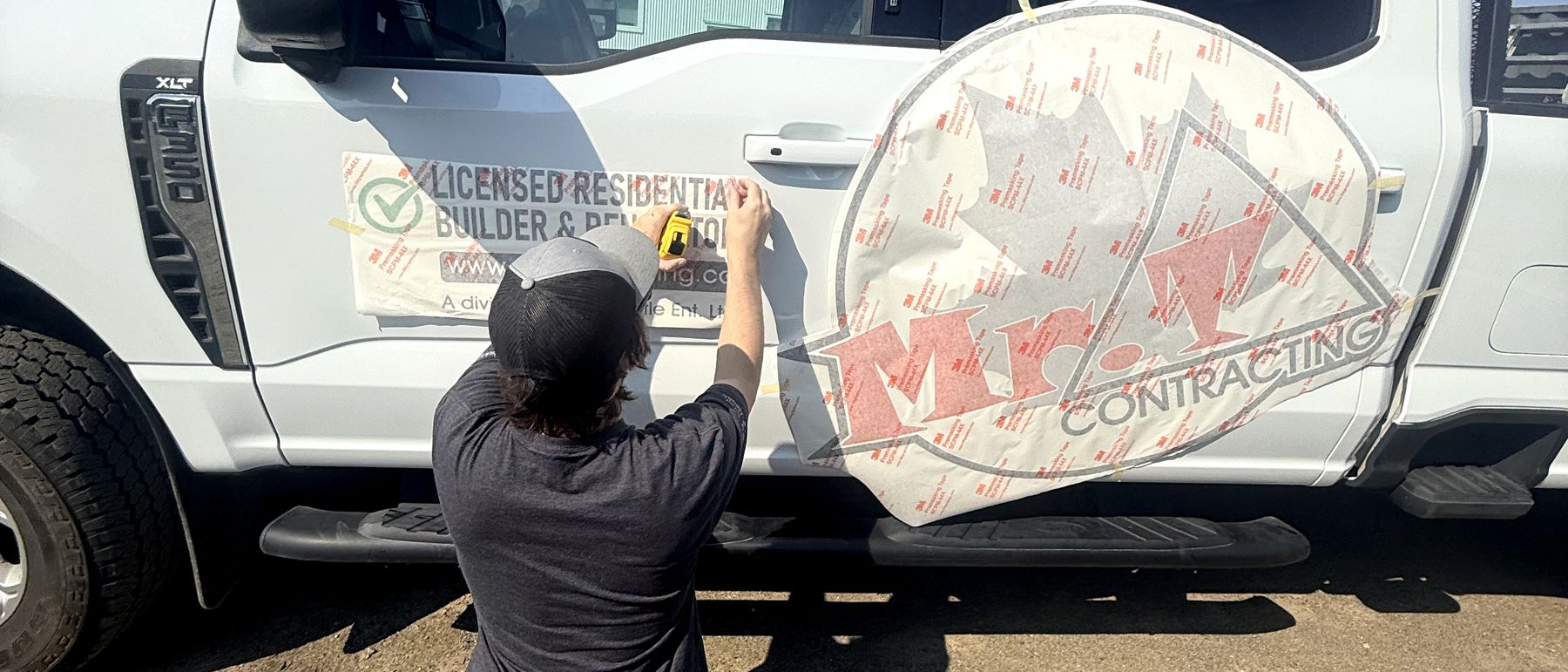
Fine work on a curved panel — the part of the job that a phone-call quote can't see.
How the job runs
Four steps, and one of them is yours.
We measure
We come to the vehicle, measure the panels, photograph the body lines and note everything the artwork has to work around.
Design & proof
We build the artwork and send you a proof to approve. Design is a paid part of the job and it's a line item on your quote — it's skilled work, and it's the step that decides whether the finished vehicle looks considered or thrown together.
Production
Once you approve the proof, your artwork goes into production on the material we specced for it, laminated for the job it has to do, then ships to Bridge Lake.
Install
Surface prepped properly, relief cuts where they're needed, every edge post-heated. That last step is the one that decides how it looks in year three.
Timeline We won't give you a date until we can stand behind it. Production time depends on the queue, freight into the Cariboo adds days that aren't ours to control, and vinyl needs a surface above about 10°C to bond properly — which in January means the vehicle comes inside. Once your proof is approved we'll confirm a date and hold to it.
Recent work
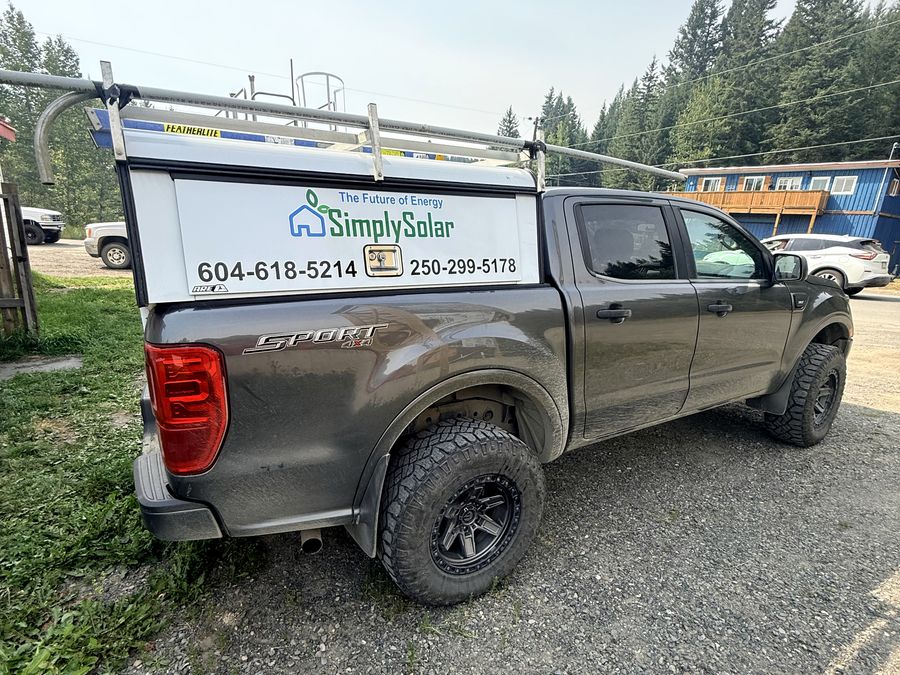
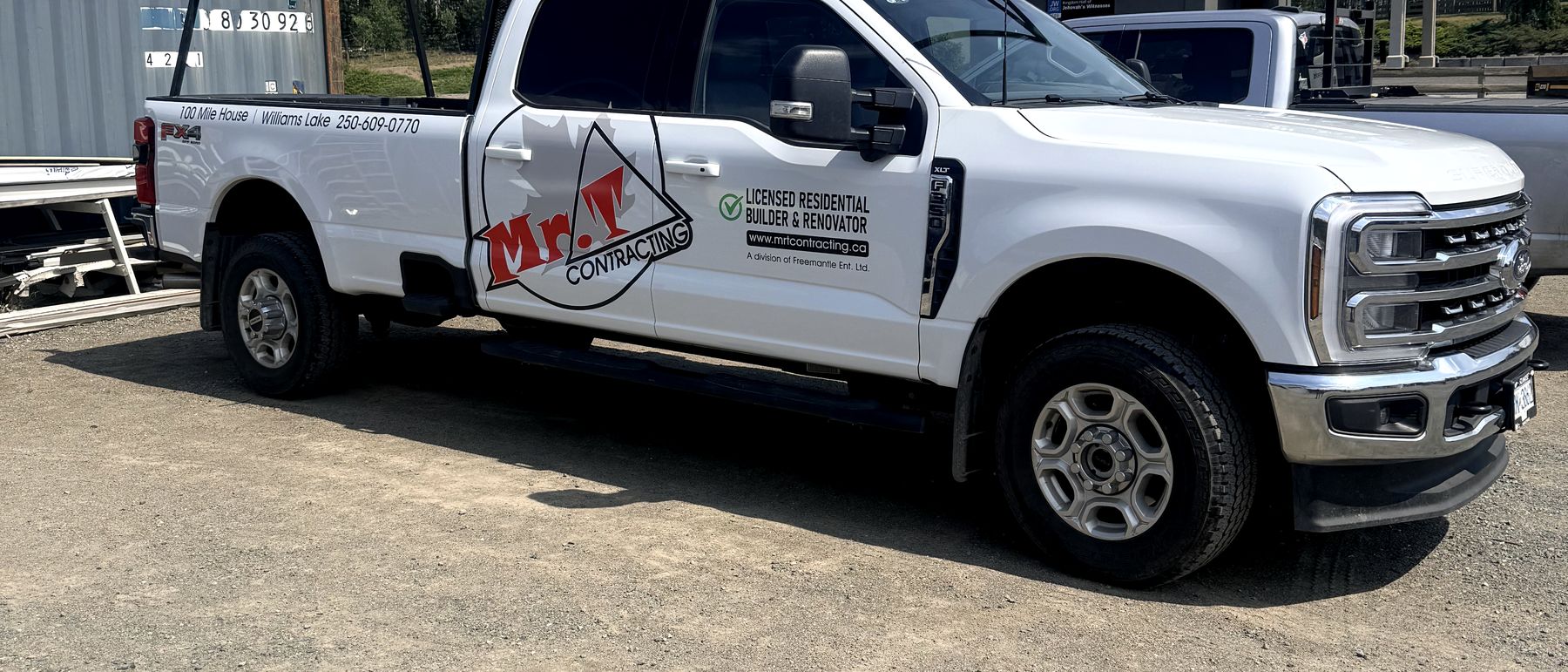
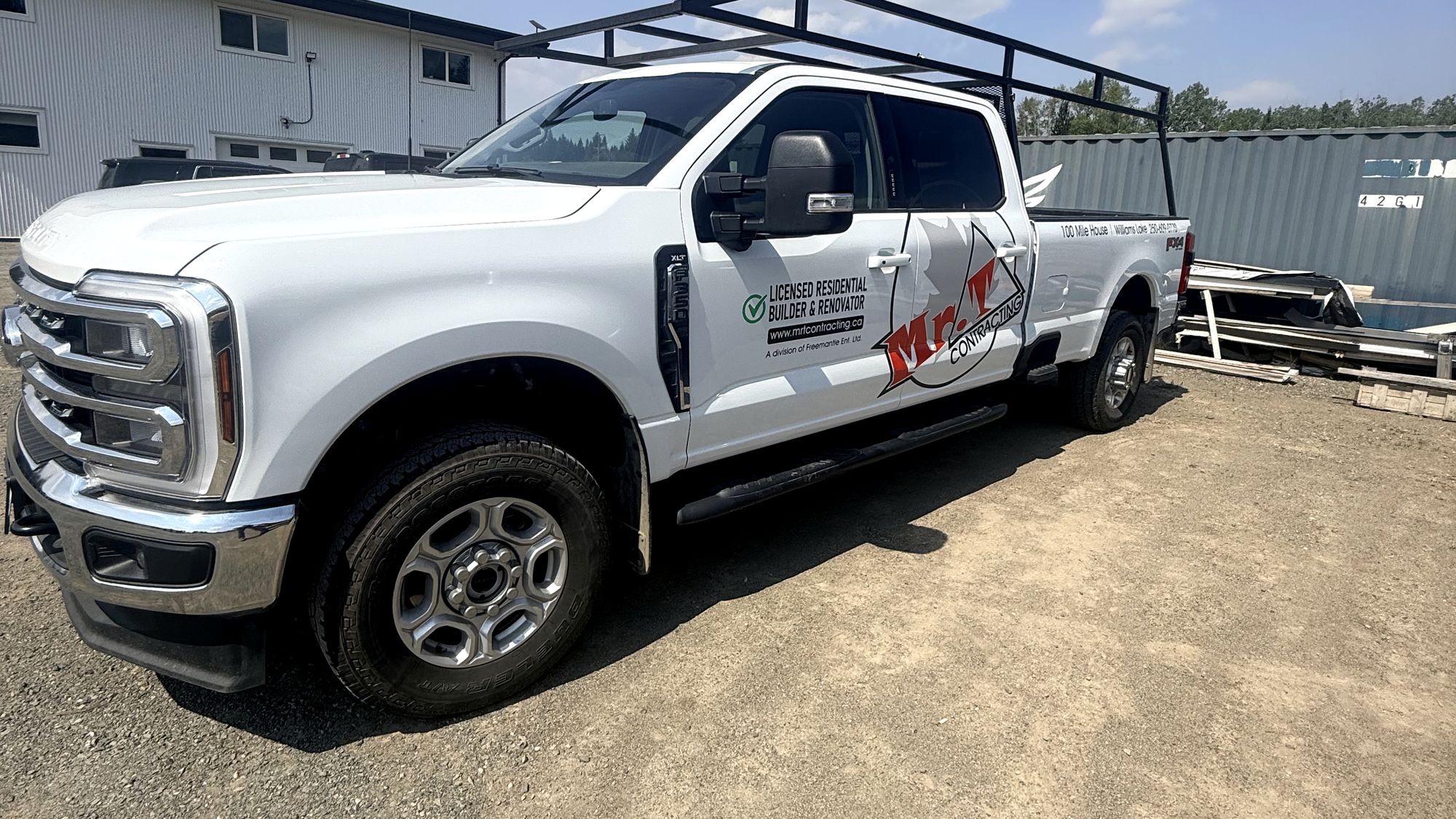
On the road in the Cariboo.


Questions we get asked
The ones that come up every time.
Will a wrap damage my paint?
On sound, factory clear-coated paint, no — it protects it. Vinyl comes off with heat and leaves the panel underneath in better shape than the ones that were exposed. Where it does cause trouble is paint that's already failing: if it's oxidised, peeling or a cheap respray, the vinyl can lift it on removal. We'll tell you before we start if we see that. Fresh paint needs about 30 days to cure and outgas before anything goes on it.
How long will it last?
Cast vinyl is rated 5–7 years, calendered 3–5. What actually decides it is sun and washing. Up here UV is harder than the coast because of elevation, and a south-facing panel will always fade before the shaded side. Hand wash rather than a brush wash, keep pressure washers back from the edges, and you'll be at the top of that range rather than the bottom.
Can I just bring you a logo off my phone?
Send whatever you have and we'll tell you honestly whether it'll hold up. A logo pulled off a website is usually a few hundred pixels wide; blown up to fit a truck door it goes soft and blocky, and that's a permanent reminder every time someone walks past. If you have the original vector file from whoever designed it, that's what we want. If nobody can find it, we can rebuild it — that's design time, and it goes on the quote.
Does it come off when I sell the truck?
Yes. Vinyl within its rated life comes off cleanly with heat and patience. Left well past its lifespan it gets brittle and comes off in pieces, which is a much longer job. If you know you're selling, tell us — it changes what we'd recommend.
Can you match my brand colours exactly?
Close, and we'll be straight with you about where the limits are. Printed vinyl and cut vinyl are made differently and will never match each other perfectly, so a design that mixes both needs to account for that. Screens don't match print either. If you have a Pantone reference we'll work to it and flag anything critical before production.
Do you do one truck, or only fleets?
One truck is most of what we do. And if there's a second one later, your artwork and measurements are on file — the next unit takes less setting up, and it matches the first.