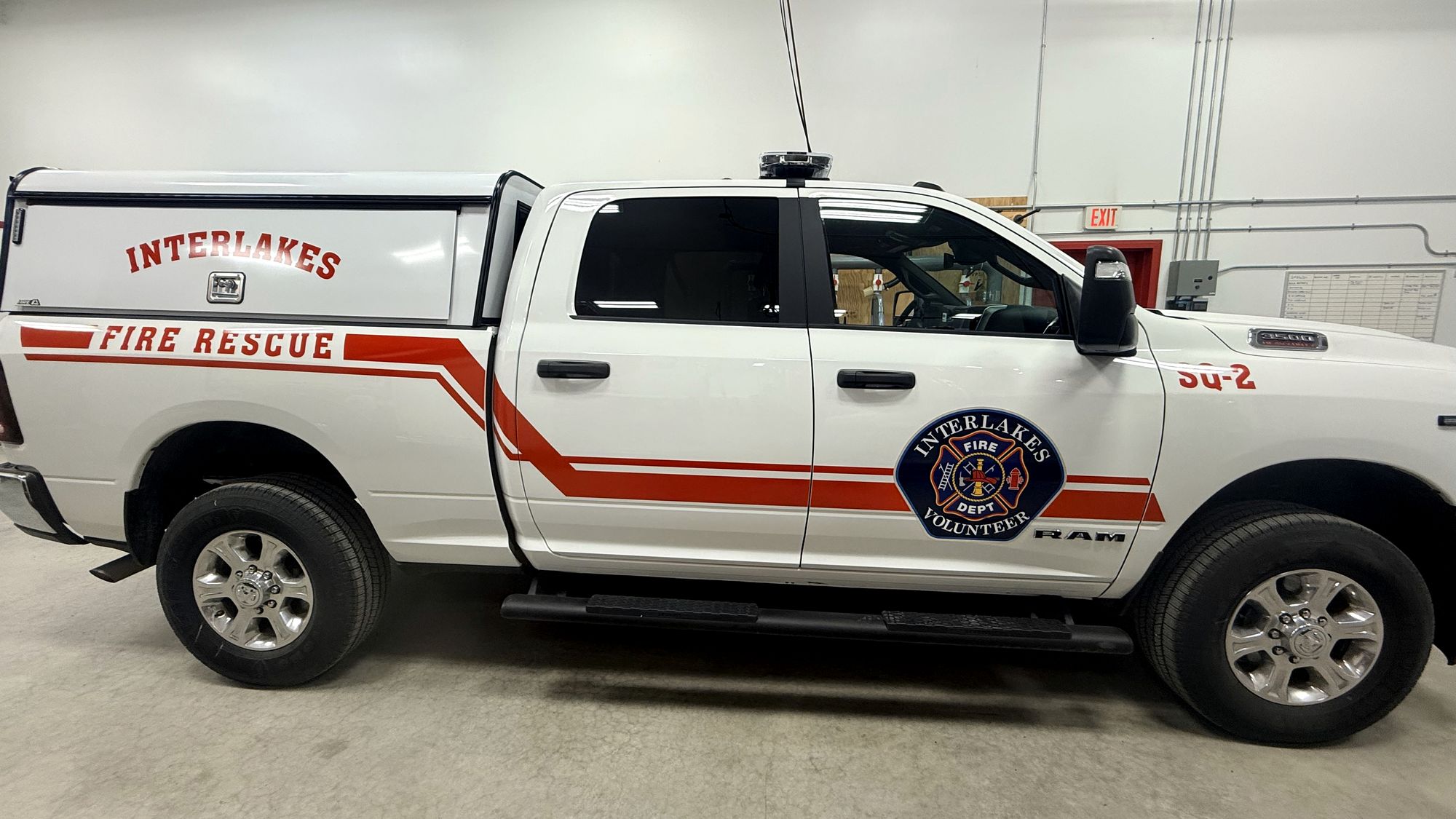
Services / Specialty Platforms
When the markings have to meet a standard.
Emergency, heavy equipment, agricultural, marine and motorsport — where the material spec matters as much as the design.
What we do
Surfaces that don’t behave.
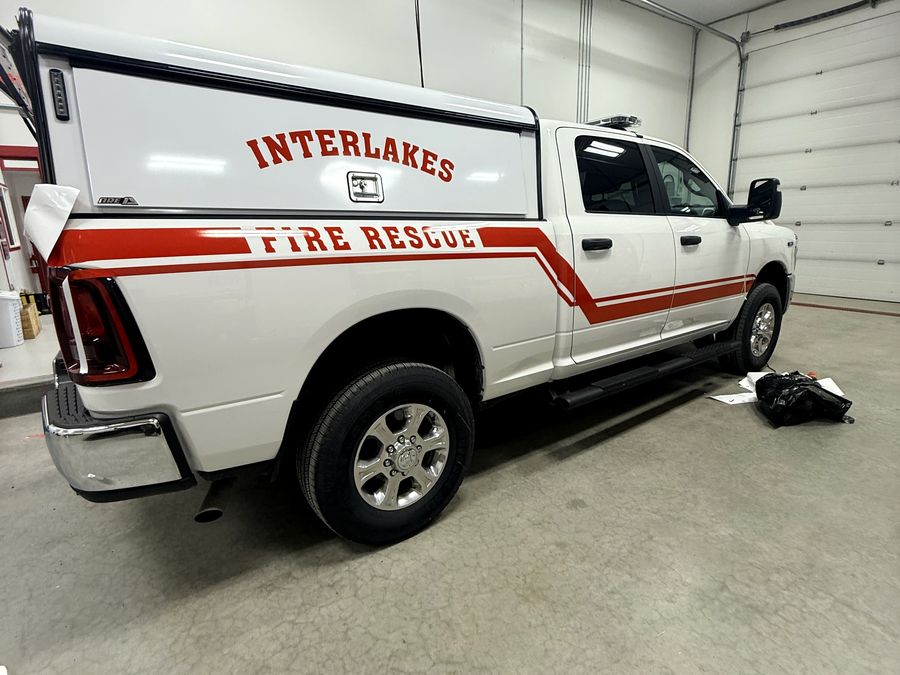
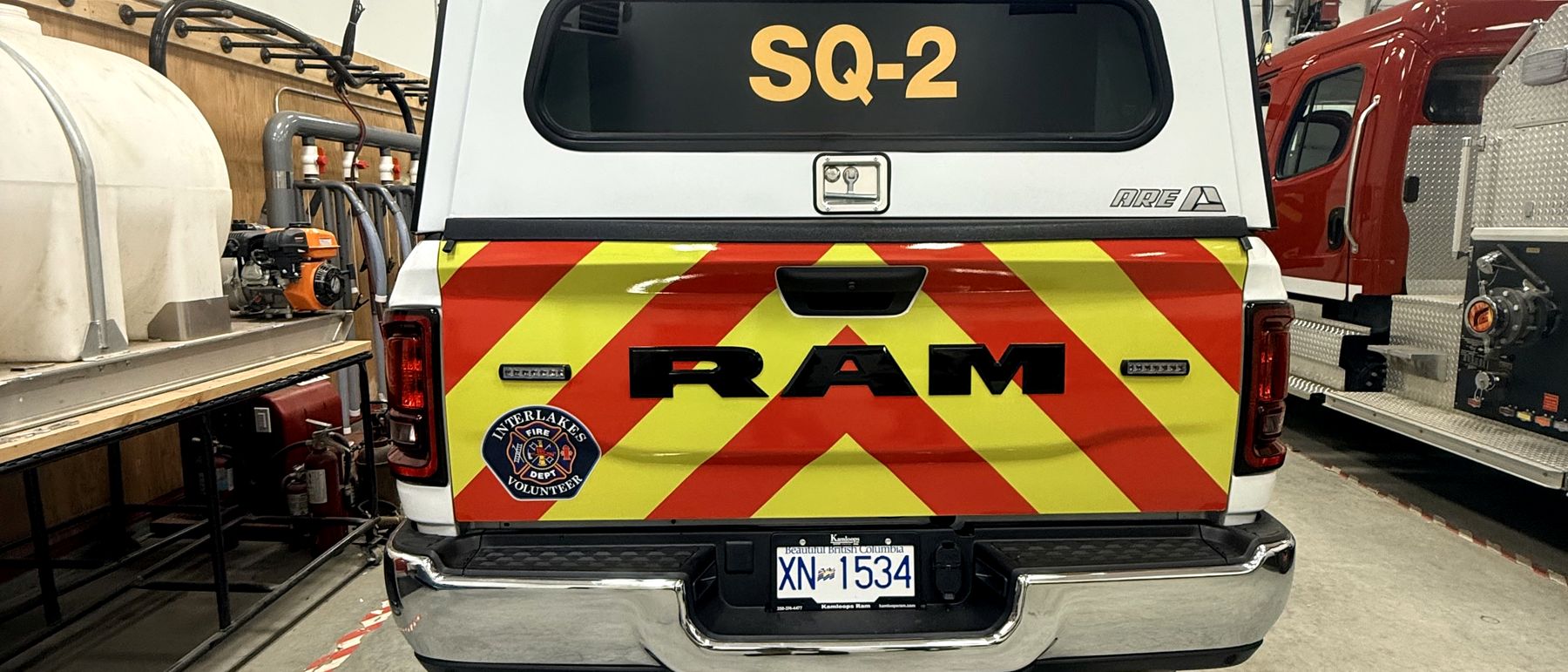
Emergency apparatus
Chevrons, striping, crests and unit numbers, specced to standard.
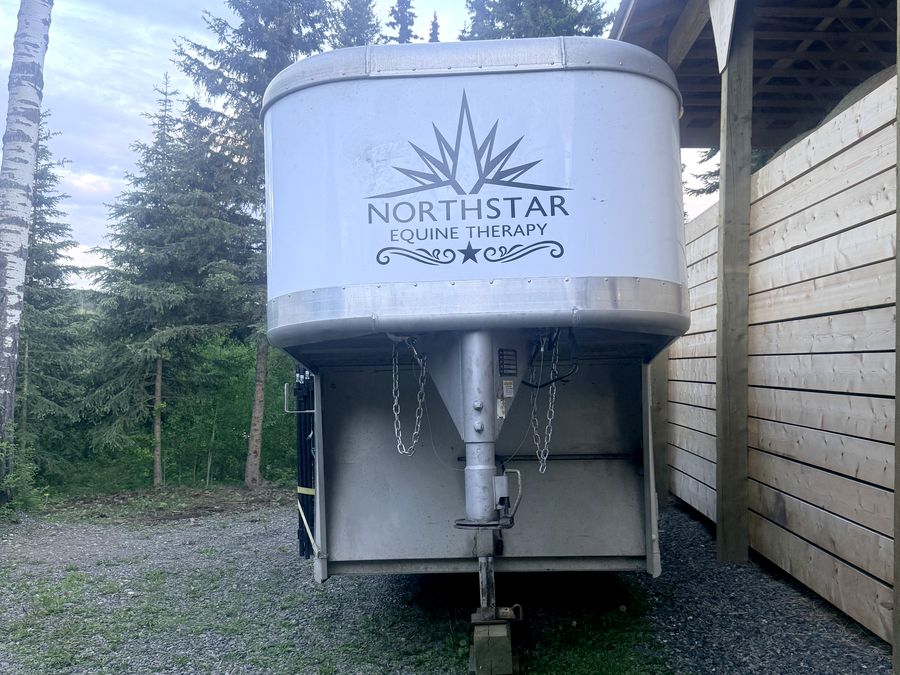
Trailers & ag equipment
Long service lives, heavy UV, surfaces that flex.
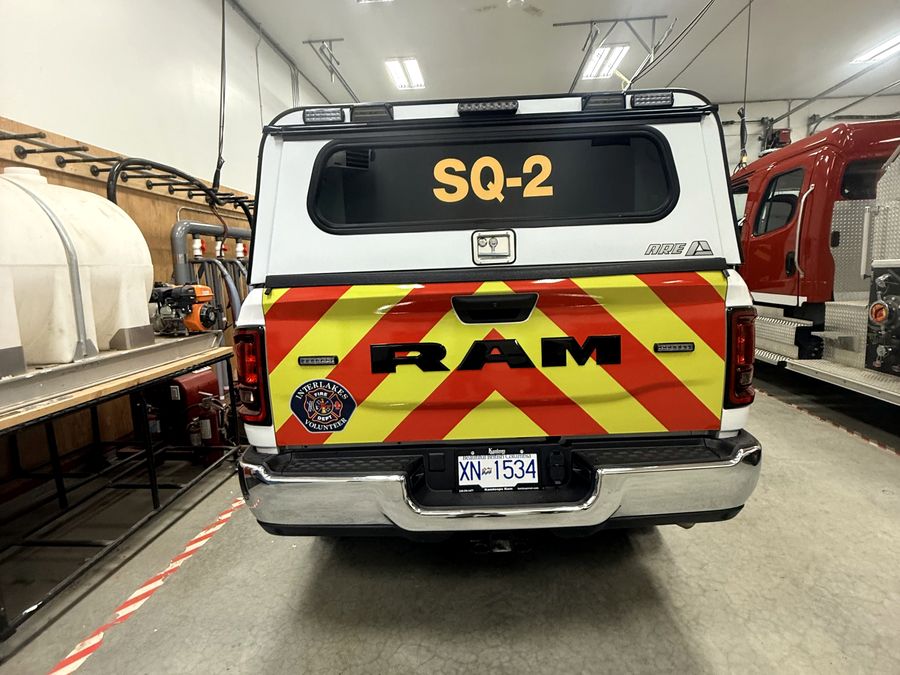
Heavy equipment
Rough service and aggressive washing.
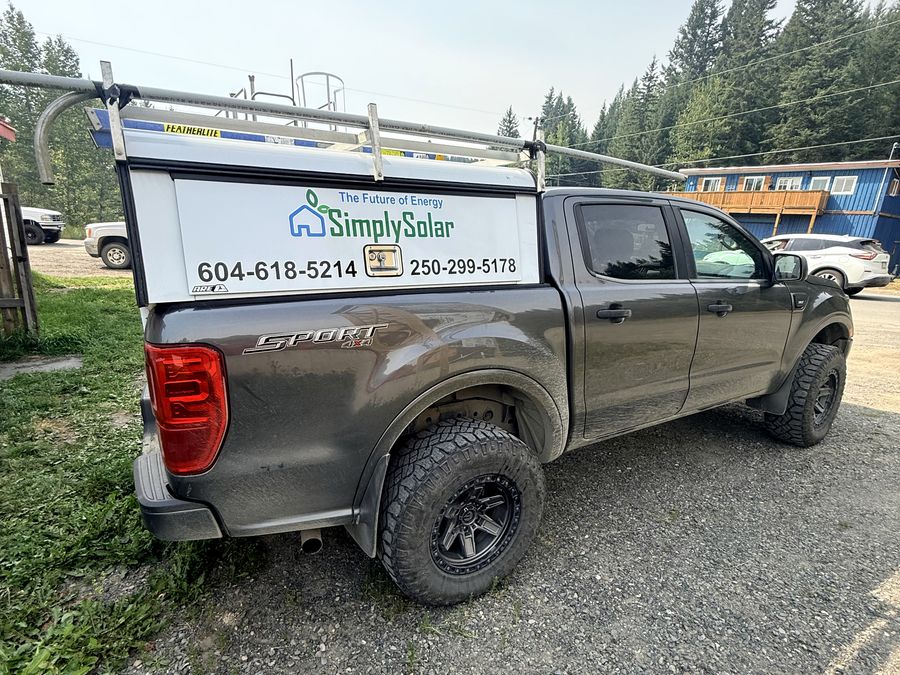
Canopies & service bodies
Working vehicles that need to be read at a glance.
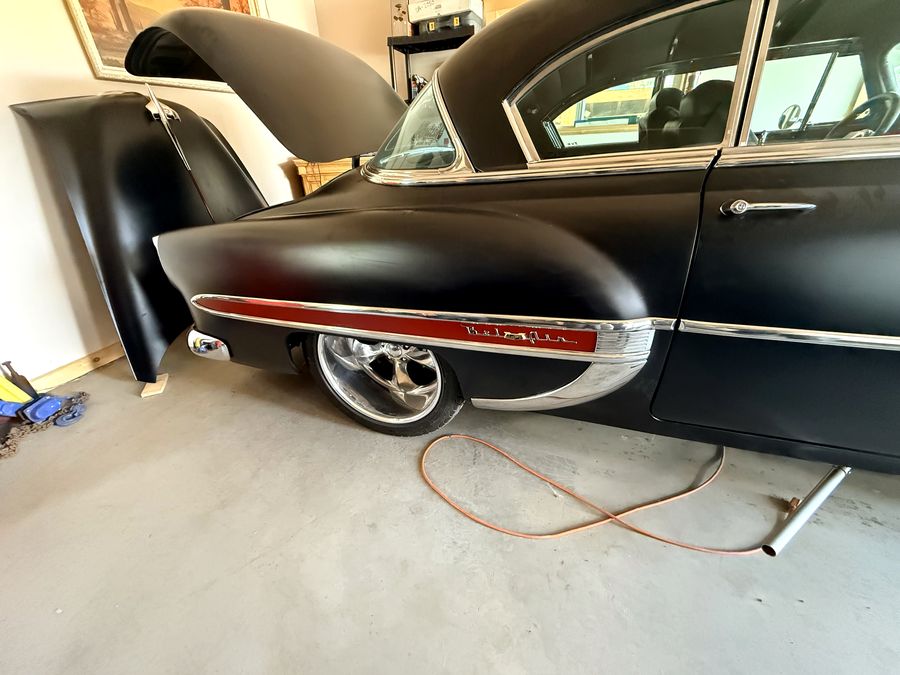
Classic & custom
Compound curves and paint you cannot afford to get wrong.
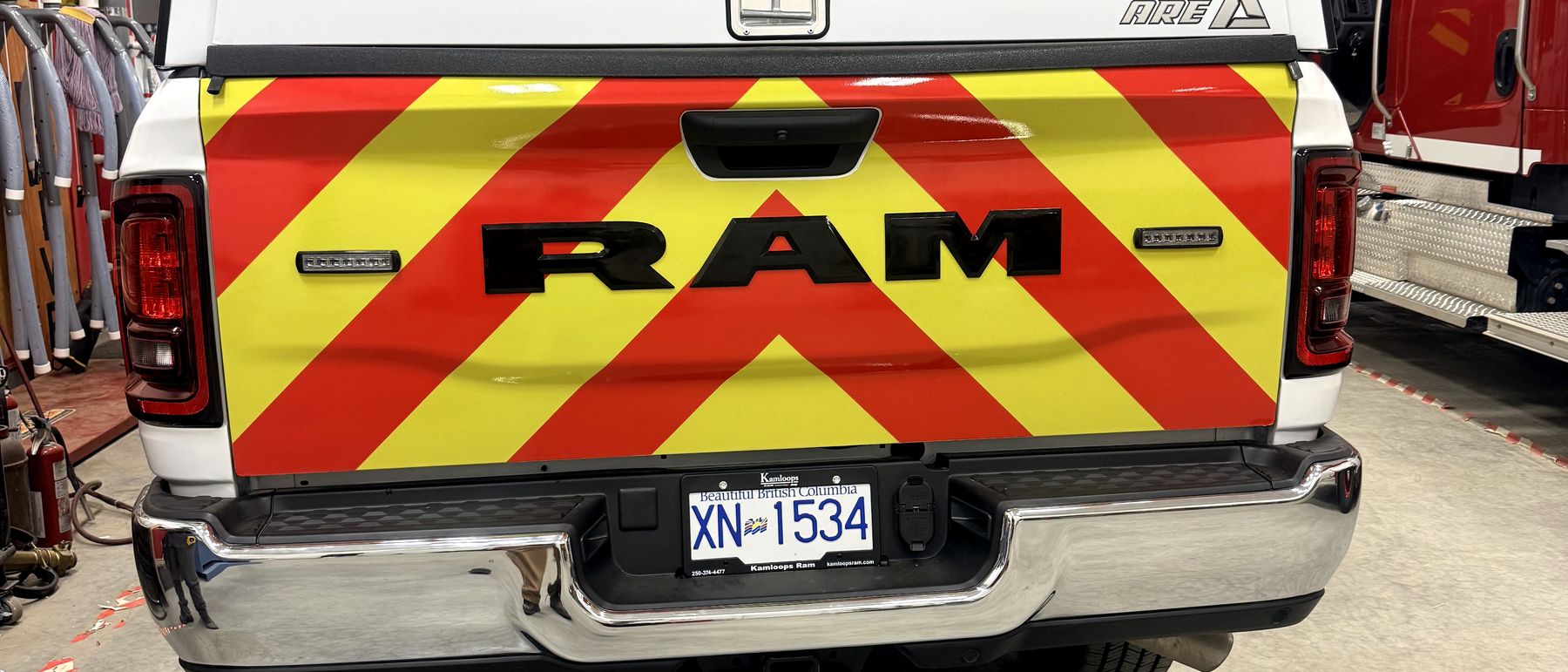
Why the grade mattersOn apparatus, the film isn’t a preference. It’s a requirement.
What you get
Done properly, it lasts.
Before Bridge Lake
Ten years of this, before the shop existed.
Boats, aircraft, ambulances, farm machinery and equipment fleets — done in Ontario, at a previous shop, before the move west. These are not Murphy’s Graphics jobs. Most of it is Liam’s work, some of it mine. It’s where the experience behind the shop came from.
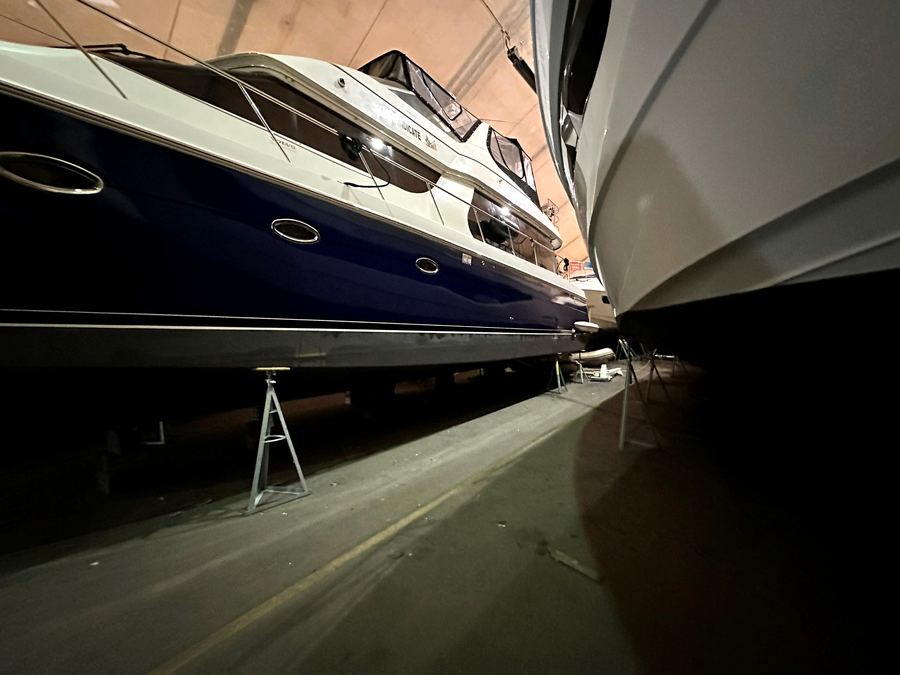 Earlier work
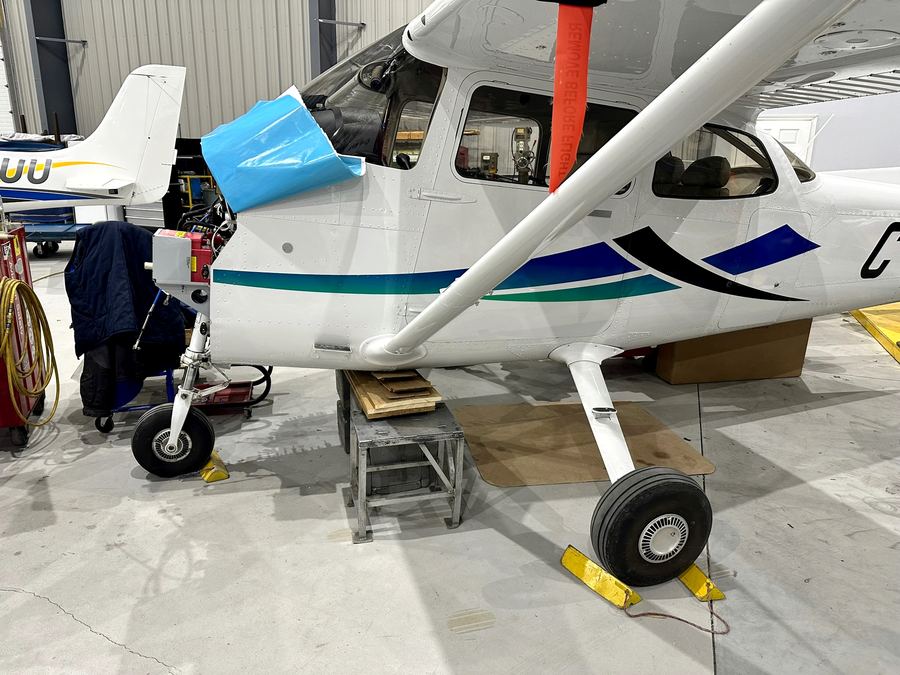 Earlier work
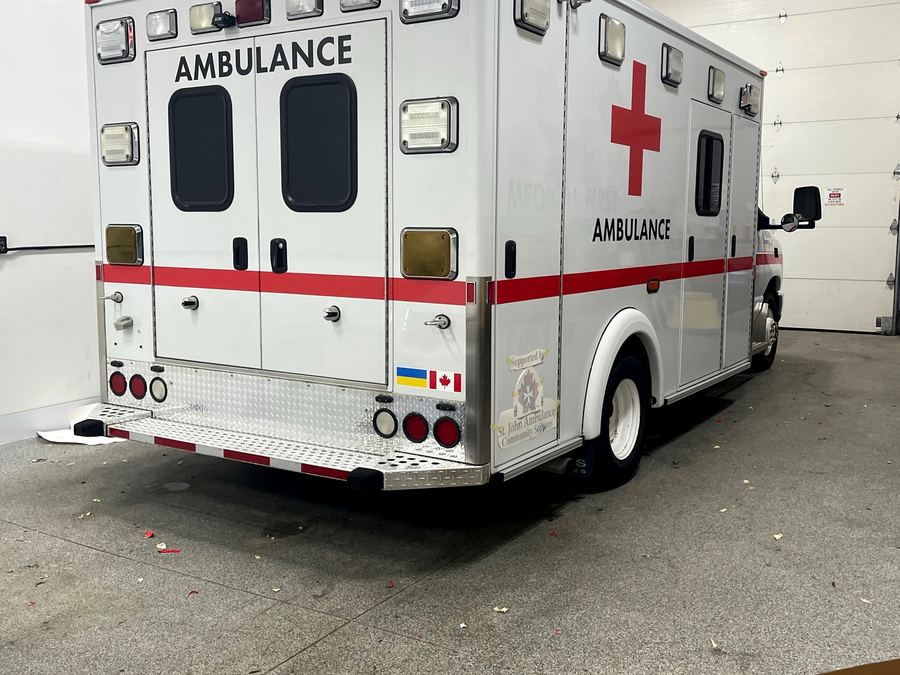 Earlier work
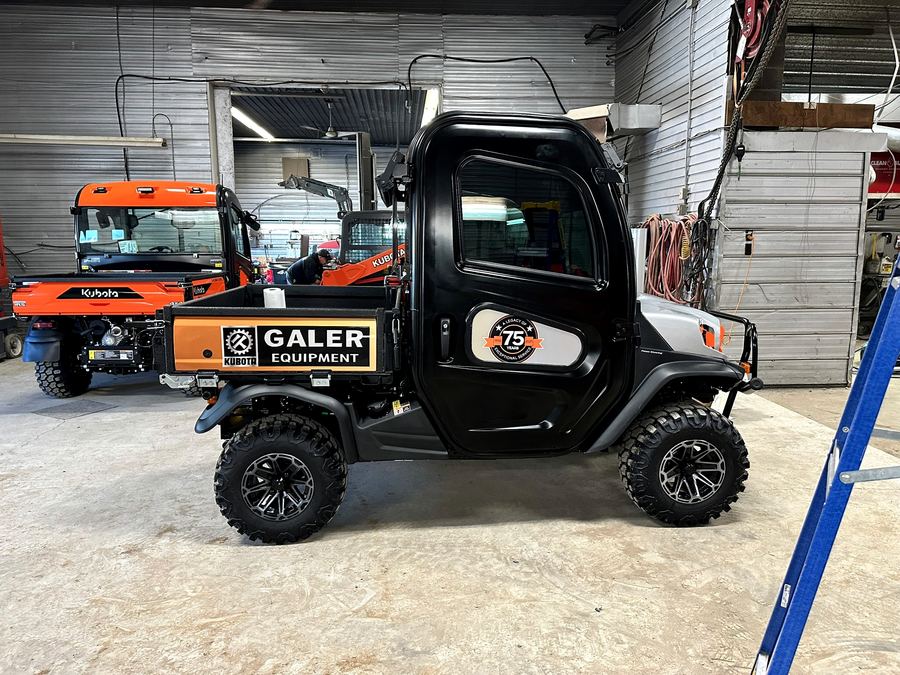 Earlier work
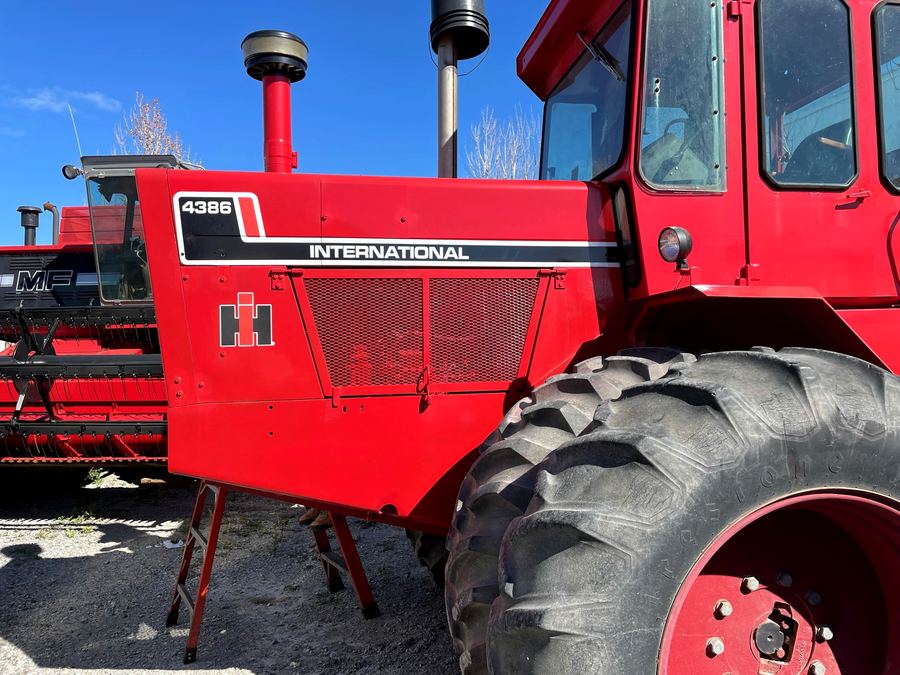 Earlier work
 Earlier work
Materials
The grade isn’t a budget decision.
Reflective film comes in grades and they are not interchangeable. On fire and rescue apparatus the required grade is set by standard, and the department carries the liability for a non-compliant vehicle.
The honest bit — engineer grade vs high intensity
Engineer grade is the entry film. Fine for property signage and non-critical identification where retroreflectivity is not doing safety work. High intensity prismatic returns roughly three to four times as much light, and it is the grade written into apparatus standards for primary markings and chevrons. Diamond grade sits above both.
Specifying engineer grade where high intensity is required is not a budget option. It is a compliance failure, and it sits on the department. We would rather tell you that at quoting than have it found at an inspection. And where the cheaper film genuinely is the right answer, we will tell you that too.
How it runsWe look at the machine before we quote a number.
The process
Four steps, no surprises.
We look at the machine
Surface type, condition, curves, obstacles and access, assessed in person.
Design & proof
Laid out to whatever standard applies. On apparatus that includes confirming placement against the requirements.
Production
On the specified material and grade, laminated for the service the machine sees.
Install
Prep to suit the surface, primer where the plastic needs it, every edge post-heated.
Timeline Specialty materials are not always on the shelf — high intensity prismatic and diamond grade can add lead time on top of production and freight. If your apparatus has an in-service date or an inspection coming, tell us at the first conversation.
Questions
The ones that come up every time.
Will the chevrons meet the standard?
That is the point of specifying properly. Apparatus standards set the grade, coverage and placement for primary markings, and we lay the job out against those rather than what looks about right. If you are unsure what applies to your unit, bring us in early.
Can you do just the unit number?
Yes, and plenty of departments start there. We quote exactly the scope you want and will not push you into a full kit.
Our equipment lives outside year-round.
With the right material and proper prep it holds. Heavy equipment is hard on graphics — UV, pressure washing, branches — so we spec more durably for machines than for a truck that sleeps in a shop.
Boats, sleds and plastics?
Different prep. Gelcoat can hold mould release that stops adhesive working, and some plastics need primer before anything sticks. Routine if you prep properly, and it fails fast if you do not.